Content Marketing Archives | Page 11 of 33 | Express Writers

The Top-Shared Content of 2019: 22 Pieces That Rose to the Top
The Top-Shared Content of 2019: 22 Pieces That Rose to the Top

To start off 2020 with a bang, we’re taking a deep, researched look at what went right in content in the past year. We’re looking at… Content pieces with huge engagement. Beautiful, successful blogs. ✨ And we’re sharing a massive shoutout to the marketers, writers, and teams behind the effort and sweat put into these pieces.️ ♥ (Because content will never be taken over by the robots. It will always, first and foremost, be humanly driven. Humans are the real content MVPs.) To compile our list, we used BuzzSumo’s powerful content analyzer and compiled the top-shared content in our topic category “content marketing.” And after coming up with a list, we manually weeded out the spam. The result? 22 pieces made of pure gold. We can’t wait to share them with you! Ready to be inspired? Inspiration, Lessons, and Insights from the 22 Most-Shared Content Pieces of 2019 The 22 Most Shared Content Pieces of 2019 1. 2019 Creative Trends Infographic – Shutterstock 2. 15 Content Marketing Tools for Success You Need in 2019 3. Interview with Neil Patel on Content Marketing with Awesome Rapid Fire 4. 18 Types of Content Marketing You Can Use to Grow Your Business 5. How Digital Marketing Will Change in 2019 6. The Death of Google Search Traffic and What It Means for Marketers 7. We Analyzed 912 Million Blog Posts. Here’s What We Learned About Content Marketing 8. The 2019 Ultimate Guide to Facebook Engagement 9. The Ultimate SEO Tool: Ubersuggest 3.0 10. 7 Steps to Create a Successful, Profitable Blog 11. 17 Charts That Show Where Content Marketing Is Heading 12. Why Local Businesses Will Need Websites More Than Ever in 2019 13. The Best Time to Post on Instagram (and the Worst) 14. 3 Ways Content Marketing Boosts Your SEO Rankings 15. Ubersuggest 4.0: The Ultimate Content Marketing Tool 16. Optimizing for Searcher Intent Explained in 7 Visuals 17. 3 Types of Social Video That Work for Any Business 18. Copywriting: The Definitive Guide (2019) 19. 26 Mobile and Desktop Tools for Marketers 20. 5 Freaking Genius Content Ideas You Can Steal from BuzzFeed 21. The Future of Content Marketing and How to Adapt 22. 5 Trends to Know in SEO & Content Marketing [bctt tweet=”Now as the year comes to a close, it’s time to look back on the top-shared content of 2019 that gained the most engagements under ‘content marketing’ (⚡ Spoiler: @JuliaEMcCoy’s SEJ post is in the 22nd spot!) See if your fave is here! ” username=”ExpWriters”] The 22 Top-Shared Content Pieces of 2019 1.  Shutterstock: “2019 Creative Trends Infographic“ Number of engagements: 17,300 Shutterstock’s post pulses with color, music, and art. It features wild photos of duotone gradients, cutouts of stars and fish, and striking images of leopard prints, snakeskin patterns, and gold chains. But reading the article is more than falling into a well of technicolor. Here are the key takeaways readers get from it: The major trends based on increased user search are 80’s opulence, raw zine culture, and early-tech neon styles. Rising trends include environmentally friendly products, childlike pastel Kawaii colors, rococo romance, prisms, and hypnotic patterns. For the first time ever, a typography style takes a seat at the creative trends table. Think 3D text made sweet with sugar dusting, chocolate coating, and sprinkles! Overall, this piece is a colorful adventure to read. Plus, it gives useful insights on styling trends in 2019. [bctt tweet=”See the top 22 content pieces of 2019 in @JuliaEMcCoy’s original study featuring Shutterstock’s ‘2019 Creative Trends Infographic’” username=”ExpWriters”] 2. Dillenium: 15 Content Marketing Tools for Success You Need in 2019 by Hina Naz Number of engagements: 8,000 You won’t be successful in content marketing without an array of fine tools. In this blog, Hina Naz lists everything you need to add to your toolkit in 2019. What I love about this blog is it isn’t limited to tools for keyword research. Hina lists a tool for perfecting grammar (Grammarly) a headline analyzer (Sharethrough Analyzer), an organizer (Evernote), and more! No wonder this post made it to number two of the top-shared content of 2019! [bctt tweet=”See the top 22 content pieces of 2019 in @JuliaEMcCoy’s original study featuring @NazHina’s ’15 Content Marketing Tools for Success You Need in 2019′” username=”ExpWriters”] 3. Sorav Jain: “Interview with Neil Patel on Content Marketing with Awesome Rapid Fire“ Number of engagements: 6,800 Ever wonder what Neil Patel does to stay fit? Or how he built his gigantic digital marketing empire? In this Youtube interview, Sorav Jain successfully mashes entertainment with serious questions about what it is to be an entrepreneur. It’s a mixture of laughter and heart-to-heart that’ll get you thoughtfully nodding your head. Neil answers questions about: His top three favorite marketing tools The secret to how he built his empire The biggest lie he ever told a client His diet and exercise regime His digital marketing predictions for 2019 and 2020 My favorite part? When Neil tries and fails to say “I love digital marketing and I cannot live without it,” in Gujarati. The most inspiring thing he said?  “Entrepreneurship is like a rollercoaster… there’s good moments, bad moments, scary moments, happy moments. You’ve just got to accept it all.” [bctt tweet=”See the top 22 content pieces of 2019 in @JuliaEMcCoy’s original study featuring @SoravJain’s ‘Interview with Neil Patel on Content Marketing with Awesome Rapid Fire’” username=”ExpWriters”] 4. Marketing Solved: “18 Types of Content Marketing You Can Use to Grow Your Business” by Kat Sullivan Number of engagements: 6,100 Most posts will give you a list of the top five or ten types of content that’ll grow your business. Kat goes further and gives you 18. Each section of Kat’s blog is carefully detailed. She doesn’t only tell you which types of content to post but also why it’ll work for you. According to her, the big three of content marketing are blogging, social media, and email marketing. In fact, she used this secret trifecta to grow her business to six figures in … Read more


Where Should I Invest My Marketing Budget? How Inbound Content Beats PPC & Other Avenues

Where Should I Invest My Marketing Budget? How Inbound Content Beats PPC & Other Avenues

Ever asked yourself, “Where should I invest my marketing budget?” What about this followup question? “How much do companies spend on marketing that doesn’t work?” Because, let’s be real – Are you seeing results from your PPC (pay-per-click) ads on Google? How about your Facebook ads? If you’re like most ad buyers, the answer is almost always a shrug, a sigh, and a reluctant, “Well… no.” That’s no coincidence. The ROI of PPC alone is lower than low. (Sadly low. Ridiculously, hopelessly low.) How low is it? That’s what we’ll discuss today: Why PPC ads and similar avenues aren’t worth it, why there are better options, and exactly where you should invest your marketing budget. (Hint: It starts with an “i” and ends with “-nbound.”) ? Where Should You Invest Your Marketing Budget? The Truth About PPC vs. Inbound ROI 1. Marketing Budget Breakdown: What’s the Real Cost of PPC? 2. Marketing Budget Reality: The Return on Ad Spend (ROAS) for PPC Ads vs. the ROI of Inbound Content Marketing 3. The Inbound Marketing Difference 3 MORE Reasons PPC Ads Don’t Pay Off People Distrust Ads in General PPC Has a Steep Learning Curve Many PPC Experts Prioritize Numbers over Human Readers Where Should I Invest My Marketing Budget? Inbound Is the Answer [bctt tweet=”? Been throwing out loads of cash for PPC ads? And was it worth it? ? If the ads in 2018 brought only 0.66x return on ad spend, then it’s a 100% NO ?‍♂️?‍♀️. Where should you invest your marketing budget then? A: Inbound Content ?” username=”ExpWriters”] Where Should You Invest Your Marketing Budget? The Truth About PPC vs. Inbound ROI If you looked at a chart of marketing budgets by industry for 2018 or 2019, you would probably see a fair amount spent a chunk of money on PPC ads. Many probably prioritized PPC above building their organic search rankings. This is a big mistake, and I want to show you exactly why. 1. Marketing Budget Breakdown: What’s the Real Cost of PPC? The cost of PPC is easy to break down in surface terms. You bid for the specific keyword you’re targeting – the maximum amount you’re willing to pay every time someone clicks your ad. If your bid is the highest (and your Ad Rank is equally up to snuff), you’ll appear at the top of search results. Here’s a visual of that from Wordstream: However, for many highly competitive keywords, bidding can get insane. For example, to rank at the top of Google with a paid search ad for a competitive keyword like “content marketing,” you would need to shell out $18 per click. However, before you decide that would be totally worth the cost, look more closely at the click data in Ahrefs. Clicks are currently going to only 4% of paid “content marketing” search results. Meanwhile, almost all the clicks (96%!) are going to organic search. Let’s put that into perspective. “Content marketing” has a search volume of 31K. 48% of searches for this keyword ended in clicks (searchers clicked on one or more of the results). That means about 14,880 people clicked a result in this SERP. Only 4% clicked a paid search ad. That means PPC ads are only getting about 595 clicks per month in this SERP. The lion’s share of the clicks (14,284!!) are going to organic search. Very, very few people are clicking ads in search results like this one. [bctt tweet=”What’s the real cost of PPC? So here’s how it goes: you bid for your target keyword aka the max amount you’ll pay per ad click. The highest bid gets to the top of search results. Easy. ? BUT, its low ROI will shock you. ??” username=”ExpWriters”] To drive the point home, let’s look at another example of the low ROI of PPC ads. A colleague recently sent me a case study from one of their clients with declining sales. Without naming names, my colleague looked at the client’s search data and conversion rates and found: About 26% of their traffic was coming from paid search. Roughly 17% was coming from organic search. Their conversion rate for traffic from paid search was 0.27%. Their conversion rate for organic search traffic was 51% – nearly 6x higher than paid search. Imagine the ROI if this client switched gears and started focusing on improving their organic search rankings! 2. Marketing Budget Reality: The Return on Ad Spend (ROAS) for PPC Ads vs. the ROI of Inbound Content Marketing The return on investment for paid search isn’t looking good. But wait: There’s more. According to The Ad Strategist, the ROAS for Facebook ads (as part of a cold ad funnel, where cold leads are served ads based on their interests, etc.) has drastically dropped within the past 1-2 years. In 2016, ROAS hovered at a decent 11.88x. In 2018, ROAS dipped to a dismal 0.66x. Display ad conversion rates have plummeted. Across industries, the average is 0.72% on mobile. That means, if you spend, say, $450 on ads, you’d only get back 0.0066% of what you put into your campaign. With a 0.72% conversion rate, you would actually lose money. Your small business marketing budget statistics would look horrible. That’s why inbound and content marketing are incredible in comparison. [bctt tweet=”Return on ad spend (ROAS) went from 11.8x in 2016 sliding down to 0.66x in 2018. ? The average ad conversion rate for mobile is 0.72%. ? These are the signs that you should change where you invest your marketing budget RIGHT NOW. ??” username=”ExpWriters”] 3. The Inbound Marketing Difference On average, across industries, organic traffic from search converts at a rate of 16%. Thus, when you target organic traffic with inbound marketing, the ROI speaks for itself. When you create content of amazing quality consistently, the stuff that speaks deeply to your target reader’s pains and problems (and solves them!), you can’t help but win. I came up with a formula for predicting content marketing … Read more

Stop Scaring Your Followers Away: 10 Scary, No-Good Content Marketing Tactics to Quit Doing

Stop Scaring Your Followers Away: 10 Scary, No-Good Content Marketing Tactics to Quit Doing

Do you know what’s super spooky? The easily avoidable content mistakes happening all. The. TIME. It’s almost 2020 – a year people used to dream about when they thought of a high-tech future – but here we are. People are still committing basic content marketing mistakes (sometimes unknowingly, but ‍♀️). These scary mistakes aren’t something to laugh about, either. They cost you a lot. Think Google rankings, traffic, leads, conversions, a loyal audience, and general content ROI. If you want your content to perform well (who doesn’t??), if you want to keep your website from becoming an abandoned, haunted house where no one dares step foot… You must know and avoid these mistakes as if they were monsters prowling the dark of night. Don’t get too comfortable, don’t get close, and if you spot one, RUN, and try to fix it. 10 Content Marketing Mistakes That Are Undermining Your ROI 1. Prioritizing the Quick Sale Over Building Long-Term Trust 2. Not Investing in Valuable, Useful Content 3. Buying Fake Followers (Follower Ghosts!) to Grow Your Online Presence 4. Targeting Focus Keywords and Related Keywords Incorrectly 5. Posting Content Whenever the Mood Strikes 6. Publishing Skeletal Content and Expecting It to Rank 7. Putting Out Lots of Scary-Quality Content 8. Letting Duplicate Content Haunt Your Domain 9. Participating in Ghoulish Link-Buying Schemes 10. Forgetting to Champion Your Reader Don’t Let Bad Content Marketing Tactics Haunt Your Brand Presence [bctt tweet=”There’s no need to have a sixth sense for us to see dead content. Low-quality copy and unethical marketing practices should get that straight to the grave. ⚰️ Save your content now by avoiding these 10 bad content marketing tactics!” username=”ExpWriters”] Run the Other Way! 10 Scary Content Marketing Tactics Undermining Your ROI If you commit any of these, call a priest – you need an exorcism to save your content marketing soul. 1. Prioritizing the Quick Sale Over Building Long-Term Trust Repeat after me: Content marketing is not about the quick sale. In fact, it’s not really about the sale at all. Now, hear me out. Yes, the eventual end-goal is to build up enough trust with your readers so they feel confident buying into whatever you’re offering. BUT. More revenue is just one possible end by-product. It’s not the point. The point is trust. When you look at a solid definition of content marketing (like this one I constantly reference from the Content Marketing Institute), note there is no mention of sales, money, or revenue. Instead, the emphasis is placed squarely on your audience/customers. Specifically, content marketing is about: Attracting and retaining your audience Driving profitable actions from customers “Profitable actions” aren’t necessarily sales. Instead, a profitable action could be adding a new subscriber to your email list, or earning another loyal blog follower. These are profitable situations because they signify interest and growing trust in what you offer. These people may eventually become not only customers but also brand advocates. That compounding future interest helps spread your brand name as an authority, builds relationships with people, and, ultimately, leads to more conversions. Trust breeds trust. Once the relationship is there, the sales will come later — but they’re not the point. Don’t settle for pushiness and try to close your leads today. That’s not content marketing. Instead, focus on building that long-term trust that wins real industry positioning tomorrow. [bctt tweet=”Don’t be a real-life undead chasing humans to get them to buy your product or service with your salesy content! ‍♀️ Start building long-term trust instead with attractive, relevant, and useful content. – @JuliaEMcCoy” username=”ExpWriters”] 2. Not Investing in Valuable, Useful Content Content that wins trust and builds loyalty is high-value, useful, and relevant to your particular audience. If your content is none of those things, you won’t reap the rewards of content marketing. It’s that simple. Conductor did the first-ever study investigating the impact of educational content on customers. The results were incredible: After reading a brand’s educational content, people were 131% more likely to purchase from them 78% rated a brand as “helpful” and 64% rated them “trustworthy” immediately after reading the brand’s content One week later, the above numbers increased by 8-9% Useful, valuable content has a direct effect on your readers. Without those traits, however, your content will be useless. If you want the rewards, you have to invest in creating and publishing the best content you can produce. No ifs, ands, or buts. 3. Buying Fake Followers (Follower Ghosts!) to Grow your Online Presence Have you ever been tempted — when you’re green with envy over your competitor’s follower count — to just buy some fake followers and call it a day? (And, just to be clear, I’m talking about non-real followers, i.e., computer-generated follower ghosts that don’t exist in real life. ) Don’t do it. Not only is buying fake followers majorly frowned-upon, but it will also have consequences that will undermine what you’re trying to do (build an engaged audience). HootSuite did an actual case study on buying fake followers on Instagram to see what would happen, and the results were laughable: 1,000 followers, each of them obviously bot-created at random, with zero engagement from any of them. If you have a large follower count but no engagement… well, that’s an oxymoron AND a red flag. Instagram will easily find your fake account and shut it down, according to their Terms of Use. Likewise, other brands won’t want to associate with your account. Getting their content or products in front of a ghost audience will do absolutely nothing for them. And don’t think you can hide it – there are tools for analyzing accounts (like IG Audit and Fake Follower Check) and estimating the percentage of the audience that’s real. Not worth it. [bctt tweet=”Ghost followers surely make your total follower count look good, but buying these non-existent accounts will just drag you to social media hell — flagged and shut down. – @JuliaEMcCoy” username=”ExpWriters”] 4. Targeting Focus Keywords and Related Keywords Incorrectly … Read more

SEO Marketing: Your Essential Guide to Putting Together Powerful, Google-Friendly Marketing

SEO Marketing: Your Essential Guide to Putting Together Powerful, Google-Friendly Marketing

SEO marketing is incredible — and more powerful than ever (despite the groans of ​”SEO is dead!” ​that you hear, literally everywhere). Here’s why. Today, 60% of ALL traffic on the internet comes from Google. (Add in traffic from other search engines, and you’ll find about 70% of all traffic, ever, starts with a simple search.) Whoa. Combine that with a simple fact: with the right keywords, topics, quality content, and some elbow grease, you can draw in search traffic from all over the world. All the people that might never have found you otherwise. By creating content around keywords they’re searching, including phrases and topics that matter deeply to them, you essentially become a magnet for buyers (with Google’s help). You pull leads into your orbit without advertising, without selling – without much effort at all beyond the initial strategizing, planning, and creating. That, my friends, is a good, basic definition for today’s term. SEO marketing definition: noun. A series of actions, strategies, and best practices that help your website content rank higher in search results. And, before you ask: Yes, it matters big-time. When you rank higher in search, more people will find your content, read your content, and act on that content. With numbers like “70% of all traffic originates from a search,” needless to say, capturing search traffic is a HUGE deal. If you have an online presence, this type of marketing is essential to master for better visibility and more leads coming in. Need more reasons to invest in SEO marketing? We’ll explore some convincing ones coming up, plus a checklist with marketing tools and techniques to help you ensure success from start to finish. Your SEO Marketing Guide: What’s Ahead in Our Guide to Powerful, Google-Friendly Marketing 5-Step Checklist for Successful SEO Marketing 1. Create Quality Content (With a Case Study: How the Write Blog Nets Over 24K Keyword Rankings) 2. Get Your Website Design & Site Tech Fundamentals Right 3. Follow Google’s SEO Standards for Quality (E.A.T.) 4. Be Smart About Keyword Usage 5. Use SEO Plugins and Tools to Help You Get It Done (Yoast SEO Plugin for WordPress, Keyword Research Tools: SEMrush and KWFinder) 3 Things SEO Marketing Should NOT Look Like 1. Cheating for Rankings 2. Keyword Stuffing 3. Thin, Shallow, Low-Quality Content [bctt tweet=”Have you already invested in SEO marketing and creating site content optimized to rank in Google? In this Write Blog, @JuliaEMcCoy shares killer reasons why Google reigns supreme for traffic sourcing, PLUS a bonus checklist on the best SEO techniques @ExpWriters” username=”ExpWriters”] 3 More Reasons Why SEO Marketing Is Such a Big Deal SEO marketing tools and techniques are good for your bottom line. How good? Ridiculously good. For starters: 1. Rank #1 in Google Organically, Perform 30% Better Besides the fact that Google holds 76.03% of the total search engine market share as of June 2019, there are other reasons to aim for #1 in Google search results. Mainly, ranking #1 in Google is a surefire way to outperform results #2-10 and earn the best ROI. It’s how you ace SEO marketing. According to data from Advanced Web Ranking, the organic click-through rate for position #1 is 30.97% on desktops. Compare that to the CTR for position #2: it gets slashed in half to just 15.29%. The lower you go, the more steeply CTR drops. Position #5 gets a 4.11% CTR. Positions #9 and 10 get just over 1%. That said, even the lowest positions on search engine results pages (SERPs) get a higher average CTR than display AND search ads, including pay per click marketing. This chart with Wordstream data shows what I mean: The average Google Ads CTR is 3.17% on the search network and 0.46% on the display network. Compare those numbers to the average CTR for position #7 and higher in organic Google search results, which is over 2%. In fact, as long as you rank in the top 5 positions, you’ll score an average CTR of at least 4%. PPC marketing seems pretty lame by comparison, especially when you can double or triple your CTR by focusing on organic search results, instead. 2. Leads from SEO Marketing Are More Powerful Let’s add more fuel to our SEO marketing fire with this little statistic: Leads coming in from SEO are far more likely to convert. According to a Marketing Sherpa study on conversion rates for organic traffic, the average traffic-to-leads conversion rate across all industries is 16%. That number is really, really impressive, considering the average conversion rate for Google Ads across all industries is 3.75% for search ads and 0.77% for display ads, via the Wordstream data mentioned above.   3. Search Traffic >>> Traffic from Social Media Another good reason to dive into SEO marketing: Search drives more traffic to websites than social media (via a Shareaholic study). Meanwhile, according to ConversionXL, clicks from social aren’t very high, either. Facebook has an average CTR of 0.72%. LinkedIn draws a dismal 0.06%. Twitter gives you the best shot at clicks with a 2% average CTR. When it comes down to numbers, search is the better bet for pulling in traffic. [bctt tweet=”Why is #seomarketing a big deal? 3 awesome reasons: ranking #1 in Google makes your site perform 30% better, ‍ ‍ powerful leads, and more traffic from search than social media.” username=”ExpWriters”] Your Go-To Checklist for Successful SEO Marketing You get it: SEO marketing is powerful, effective, and SO worth it. It’s time to implement. Here’s a checklist to start with, including 5 basic steps to achieve successful SEO search marketing: 1. Create Quality Content Quality content is everything to SEO marketing results. In fact, I would say it’s THE #1 factor. How do I know? It’s what I’ve seen with our content at Express Writers. Case study time. Case Study: How Our Content Quality Nets Over 24K Keyword Rankings I never pay a cent for ads, I never do outreach, and I never pursue backlinks. Despite that, our content at EW has … Read more

Your Mega-Awesome Content Marketing Statistics List

Your Mega-Awesome Content Marketing Statistics List

There’s no question content works. That’s right – no question. That means investing in content marketing isn’t a gamble. Not if you do it the right way. Need proof? Look at the state of the industry: Its projected worth will reach nearly half a trillion dollars by 2021, according to forecasts from Technavio. Why is investment reaching this all-time high? Because the evidence that content works is right there for anyone to see. Ready to see for yourself? Check out this mega list of content marketing statistics for 2019. These are the most powerful stats we could find that will prove content marketing to anyone. (For even more proof, add our post on proving the ROI of content marketing to your reading list, too.) 17 Content Marketing Statistics That Matter: Table of Contents Top Digital Marketing Statistics for 2018-2019: Why SEO is Super-Powered Content Strategy Stats: Compelling Reasons to Start Planning Content Creation Statistics: Why Invest in Content? Stats on B2B Content Marketing Effectiveness Let B2B Content Marketing Statistics from 2019 Inform Your Future [bctt tweet=”Read our list of 17 powerful content marketing statistics that prove content worth (free ebook included!) ” username=”ExpWriters”] Top Digital Marketing Statistics for 2018-2019: Why SEO is Super-Powered Search engine optimization powers much of content marketing in 2019, and it will continue to do so. Let’s examine why. 1. The #1 driver of all traffic on the web? Google. Google is not only where most web searches start – but also where most web browsing begins. It’s not surprising. They own 76% of the total search engine market share, according to Net Market Share data. Using SEO to rank in Google for keywords your audience is searching is, therefore, an incredible strategy. If you don’t want to grab some of that traffic for your site or your brand, well, why are you here? 2. Search drives more traffic than social media – 34.8% compared to 25.6%. (Shareaholic) Search is even more powerful than social media for driving traffic. Search Engine Land reported that search beats social networks by nearly 10 percentage points in this arena. Shareaholic conducted the study and found that the algorithm changes to the News Feed on Facebook had a big impact on the numbers. Along with that, more and more, search engines like Google are indexing and displaying results from social media channels. For instance, search for any entity on Google (person, company, organization), and you’ll see results displayed from their Twitter feed: Generally, posting on social media shouldn’t be your marketing end-all, be-all. Instead, social media marketing should complement your SEO and digital marketing efforts for best results. 3. The average conversion rate for organic traffic-to-leads across industries is 16%. (Marketing Sherpa) Since a conversion generally refers to the instance when a buyer converts to a new role in your marketing lifecycle, conversion rates are a big deal. After all, most marketing aims to encourage buyers to convert in some shape or form. When we talk about a traffic-to-leads conversion, we’re talking about the point when the traffic coming into your site from a Google search becomes intrigued, interested, and invested in your content. As a result, they’ll demonstrate that interest through action. In their study, Marketing Sherpa asked marketers how they define a conversion. The results reveal how multiple actions show a buyer’s mindset and willingness to commit to a brand: Submitting a form with multiple fields (like a survey) Submitting a form with one field (like signing up for a newsletter with an email address) Making an online purchase Reading the content through to the end The 16% conversion rate the study found is therefore super-important. This is for organic (non-paid) traffic clicking your content in search, liking what they see, and converting on it in one of the above ways. 4. Google’s #1 organic position brings in 33% of the search traffic for any given SERP. (Search Engine Watch) When you’re #1 in Google, you’re pretty much Queen (or King) of the Mountain. On average, 33% of search traffic will go to you, while only 17.6% will go to whoever graces position #2. (That’s a 15.4% drop.) Even if you rank at #5 (which many brands would kill for!), you’re only getting 6.1% of all search traffic from that page. Bottom line: The higher you rank organically, in SERPs, the more traffic you can expect to see! (And, as you know, more traffic = more lead potential.) By the way, one of the keys to ranking higher is knowing which tools to use for SEO and keyword research. I put together a guide on Content Hacker on this exact topic to help. 5. The click-through rate (CTR) for organic position #1 is 30.97%. (Advanced Web Ranking) Let’s keep going with the bonuses of ranking in organic position #1. If you sit in that top spot, you’ll also enjoy an average CTR of 30.97%, according to data from Advanced Web Ranking. Why is that number such a big deal? Well, as far as CTRs go, it’s incredible. To see what I mean, move on to the #6 statistic for marketing. 6. Meanwhile, for Google Ads on the search network, the average CTR is 3.17% across industries. (Wordstream) Comparing Wordstream data about average CTRs on Google Ads across industries to the CTR for position #1 is a good way to see the whole picture. The average CTR on search network ads is 3.17%. Meanwhile, organic position #1 enjoys a CTR over 10 times higher than that. Plus, you won’t have to pay for that visibility. Content creation isn’t free, but it’s definitely cheaper than paying for search ads. [bctt tweet=”Why SEO matters in 2019? Google is still #1, search > social media, the avg. conversion rate for organic traffic-to-leads is 16%, and ranking first in Google gets 33% traffic + 30.97% CTR, 10x higher than search ads CTR.” username=”ExpWriters”] Content Strategy Stats: Compelling Reasons to Start Planning Content strategy is necessary to pull together all the pieces of your … Read more

The Secrets of Grabbing Attention Online: Insights from YouTube’s “Skip” Button

The Secrets of Grabbing Attention Online: Insights from YouTube’s “Skip” Button

Creating ads is a tricky business. It’s a case of a phenomenon I’ve mentioned before: the marketer’s equivalent of the Hawthorne Effect, which was a study done in the 1920s that discovered changes to people’s experimental conditions (amount of light, time to work, etc.) led directly to increases in productivity. Well, interruptions lead to negativity — decreases in productivity, decreases in happiness. And most ads are, in fact, very interruptive. They were built to be. Today’s modern, savvy consumer doesn’t react well when they know they’re being promoted to, especially when ads are interrupting a current consumption or focus. Take, for example, clicking a YouTube video. An ad pops up — the viewer may already have their mouse in the lower-right corner, just waiting on “Skip” to appear. This could be said for all ads. I mean, just look at the ROA (return on advertising). Yikes. Source: Ad Strategist (see our summary on Express Writers) Just a few years ago, you could expect to generate nearly a dozen times your investment on Facebook Ads, whereas that number has plummeted in the present day. It isn’t just because of the woes of any particular platform. It’s because people are cautious about being promoted to. So, what’s the secret for getting them to stick around and hear what you have to say? Well, what about looking at the ads on YouTube that people simply have to stop and watch, and can’t skip? Yes, we can learn a thing or two from those captivating pieces of art. That’s what I’m here today on the Write Blog to explore. [bctt tweet=”What’s the secret in getting people to stick around and hear what you have to say, in an online world full of millions of other marketers? @YouTube’s skip button has some pretty cool insights.  More from @JuliaEMcCoy” username=”ExpWriters”] The Appeal of Storytelling: What Makes Us Gravitate to it? There’s something enthralling about a good story. Most people’s first exposure to stories comes when they’re small, hearing about fairytales before bed. Stories stick with us throughout life, both on the personal level of banter and campfire stories all the way to tales woven into books, TV, and movies. In a way, our lives are stories. Maybe that’s why we relate to the stories of others so well. Stories and the narratives that come with them are proven to help us construct memories, playing a greater role in our psyche than many realize. A group of neuroscientists at Princeton University did a study on brain patterns during storytelling. They found the response patterns in the brain were the same for the listeners as they were for the storytellers. Both figuratively and scientifically, stories connect us. [bctt tweet=”Learn what makes @YouTube audience members forget to hit ‘skip’ on ads. Stories connect us – both figuratively and scientifically! More from @JuliaEMcCoy” username=”ExpWriters”] It should come as no surprise that storytelling has emerged as a powerful strategy within marketing. Great content connects the creators with the audience and the brand with the customers. Check out this snippet of a great infographic from OneSpot. Source: OneSpot The connection between story-like ads and the tendency of people to avoid the skip button has been explored and reveals insights on what makes an ad good in the mind of a viewer. 3 Lessons on What Makes Ads Watchable and Inviting [bctt tweet=”3 secrets to grabbing attention, from @YouTube’s Skip button: 1. Personalized content 2. Genuine storytelling 3. Content that feels real ” username=”ExpWriters”] Telling your viewer a story rather than giving them a pitch is much more likely to make them stick around. Here are three examples of how it’s worked in the past, and how you can do it in your own ads. 1. Personalized Ads Help Bridge Taboo Topics Abreva had a tough task ahead of them when they marketed a solution to cold sores. While this is a problem many people suffer from, it isn’t one a lot of people like to talk about. Turning to YouTube and building over 100 personal ads, Abreva sent simple, six-second pre-rolls to users based on relevancy. Search interest boomed over 300%. Users who were searching celebrity gossip would get ads about how they couldn’t control the latest breakup but could stop cold sores. Users who searched up beauty tutorials would get ads on how they could keep pouty lips but lose cold sores. Personalized ads blend in – making them feel less promotional and more relatable. They also effectively bypass any defensive tendencies the viewer may have as a result. 2. Genuine Storytelling Grabs a Viewer’s Attention The volume of ads, and content, in general, is growing rapidly. With so many options to choose from, users are extremely selective. They’ll move on fast from video or an ad if it isn’t connecting with them from the beginning. Nearly two-thirds of people skip ads when given the chance, with nearly three-quarters of people admitting they do it out of habit. In a 15-second ad, you have a little over five seconds before the skip option pops up. In a 30-second ad, you have a little over seven seconds. Why do they do it? More often than not, it’s because they just want to get to the video. Source: MarketingSherpa So how do you stop them from skipping? Give them something just as interesting to watch. Your content becomes less like a barrier blocking them and more like a content appetizer before the main course. If you hear a good opening line in a book, a movie trailer, or a TV pitch, you may stick around. What’s this story about? The same thing can be done with an ad. To stop viewers from impulse skipping, you should start your story off from the beginning and build on it. 3. Content That Feels Real Gets Watched Going back to how people will automatically put up their guard if they feel a promotion coming on, real content is the way to go. What qualifies as real? If something is real, … Read more

How to Create Craveable Content: Use the Topic Circle Concept 

How to Create Craveable Content: Use the Topic Circle Concept 

What’s one of the biggest mistakes marketers make when creating content? It’s when they plunge ahead, and immediately spring into creation mode. Wait… really? Yes, you heard right. While it’s great to have ideas and inspiration for the creation phase of content, one vital, monumental piece is missing for success in the above scenario. What is it? What your audience wants. Sure, you might think your content idea is great. But if your audience doesn’t agree, content will go nowhere. You’ll get zero traffic. Zero shares. Zero comments. Zero engagement. Zero conversions. *shudder* On the other hand, if you create craveable content your audience is dying to read, your content will go the distance. Check this example of the lifecycle of one impactful piece of content. Done well, it can nurture your visitors into becoming loyal customers. (Read more about how our readers have become buyers.) Impactful, audience-satiating content is a big deal. So, the real question here is, how do you find out what your audience wants? How do you know which content topics are gold, and which are destined for the grave? I’ve come up with a concept that will help. It’s called the Topic Circle. Let’s explore how to use it to create craveable content your audience wants and needs. [bctt tweet=”Don’t go straight into creation without knowing what your audience wants. But how do you find out? @JuliaEMcCoy has a concept called the Topic Circle ⭕️ that can help you flesh out truly craveable content. ” username=”ExpWriters”] How to Create Craveable Content Your Audience Hungers For Using the Topic Circle Concept The Topic Circle is a good way to visualize the intersection of your expertise + what your audience wants. If you only rely on your expertise to come up with content topics, you’re climbing a slippery slope. Sure, you can write about those topics with confidence and authority, but at the same time, who knows if your audience will care? That’s why you need to visualize how your expertise meshes with what your audience wants to read. This is what it looks like: And put into practice, this is what a Topic Circle mapped to topics your reader actually wants to read looks like. For example, if your expertise is selling running shoes, your audience doesn’t necessarily want to read about types and styles of shoes. Instead, they might want to see content dealing with health and running apps, training, hydration, etc. To arrive at your own topic circle, let’s look at how to build it. 1. Know Your Expertise First up, knowing your expertise is fundamental for building your own Topic Circle. That’s because your expertise serves as your topic core – the area of knowledge you’ll focus on in your content. There are a few ways to define your expertise (one or all of these may apply to you): Your passion What you do for a living What you’re an expert in Here are a few topic circle examples. If you’re a pastry chef, your expertise might be baking desserts. Here’s how to map that to topics your audience wants to read about. If you’re a nature photographer, your expertise might be identifying and photographing nature scenes, birds or landscapes. There are so many ways to map this to topics your audience wants to hear about. And the list goes on. [bctt tweet=”How do you know what topics your readers will love? You need a Topic Circle. Define what your expertise is, to start. What’s your passion? Your work? Your best skill? For more tips, check out @JuliaEMcCoy’s guide craveable content ” username=”ExpWriters”] 2. Know Your Target Audience Inside-Out So, you’ve defined your expertise and your core topic area. Now you need to know what someone buying or learning about products in your topic area wants to read about. To help you discover those sub-topics, you need to do some digging. 2.1 Research Your Targets Don’t guess what your target audience looks like. Research. That means: Looking at your customer data in Google Analytics Performing one-on-one interviews Taking surveys Using Facebook Audience Insights Image: Facebook All of these actions help paint a picture of who you should be targeting with content, and what they want to read about. 2.2 Know Where Your Audience Lives Online One of your research goals should be to learn where your audience lives online, including: Social media sites where they hang out Hashtags they use Forums they participate in Influencers they follow and trust Blogs they read and comment on Once you discover these places and resources, you can internet-stalk them to find the questions and pain points people are talking about. Then, you can cover those in your content! 2.3 Create an Audience Persona Once you have thoroughly researched your audience, it’s time to distill that information into a resource you can reference over and over: the audience persona. This is an imaginary profile of your ideal audience member – the person who loves your brand, follows your content, and buys your products. The profile should contain key information that helps you target them in your content, such as: Demographics (age, gender, location, marital status, education, etc.) Occupation, job roles and income Work and life goals Challenges blocking them from meeting those goals Personal habits, preferences, likes/dislikes, etc. Here’s a sample audience persona built for Express Writers: This is an ultra-valuable tool that will help you figure out what your audience wants from your content. MAJOR tip: When thinking about a possible content topic, ask yourself if your persona would benefit from reading it. If the answer is iffy, find another topic. [bctt tweet=”For successful content, you need to know your audience inside-out with deep research, discovering where they ‘live’ online, and by creating an audience persona. Read more on @JuliaEMcCoy’s guide to creating your Topic Circle.” username=”ExpWriters”] 3. Ask Your Audience Directly About Their Biggest Challenges Another good way to flesh out your Topic Circle and understand what your audience wants: Just ask. Seriously. Send out an email … Read more

40+ Digital Marketing Experts to Follow on Twitter: Keep Your Marketing Skills Up to Date

40+ Digital Marketing Experts to Follow on Twitter: Keep Your Marketing Skills Up to Date

Digital marketing is constantly evolving. SEO trends and content marketing strategies that worked six months ago might not produce the same results today. So, what can you do as a marketer, entrepreneur, or website owner? How can you keep up with the latest marketing strategies, the algorithms, and analytics? The answer? Follow the right people on Twitter. There’s no better way to stay up-to-date than to follow the right people on Twitter and scroll through their feeds filled with great advice. Twitter is ​one of our favorite social media platforms, but we all know there are over 500 million tweets sent out each day. No one has the time to check each account and verify the real pros from the self-proclaimed “experts.” So, to help you sift through the non-relevant stuff and get straight to the information that really matters, we’ve compiled this list of the leading digital marketing experts and publications to follow on Twitter. Each of these experts seems to have cracked the code with not only understanding the complexities of digital marketing but also putting them into practice. They are moving the industry forward with their innovative strategies. The best part? They’re constantly sharing their knowledge — all for free. What are you waiting for? Scroll down to see the list, add the experts you’d love to follow, add value to your Twitter feed, and keep your content marketing skills in top shape. Read, learn, share, and enjoy! Did we miss anyone? Let us know in the comments!   [bctt tweet=”NEW: Our top 40+ recommended #marketing experts to follow on Twitter, a list curated by @daninofuente and @JuliaEMcCoy ✨ Is your digital marketing hero on the list?” username=”ExpWriters”] How We Hand-Curated Our List of 40+ Digital Marketing Experts There were a number of factors that helped us decide on which experts to recommend for following. Our CEO, Julia McCoy, was heavily involved in the creation of this roundup. She reviewed and approved each of the people we recommend below. Secondly, two of us writers were included in the formulation: one of our copywriters, and me, Danielle, Express Writer’s Content Specialist (and everything else behind the scenes). We think that humanly created lists are some of the best lists! Next, here’s what we looked at when determining who to recommend to our Write Blog readers. First, we looked at experts in content marketing, social media, and SEO. Then, we considered digital marketing experts who are regularly invited to share their knowledge by speaking at leading conferences all around the world, and writing for consistent columns or their own blog. Instead of tenure (years in the field), we looked at recent accomplishments and studied to find people that are the most current in the marketing space. We believe that matters more than tenure. If you’ve been a marketer for 30 years and you haven’t written a single blog on marketing trends for the past six or even three months, are you even current? We also researched the pioneers and thought-leaders. What did they share on Twitter that was noteworthy, original, and outstanding? Finally, experts who’ve mastered current industry trends and are influencing future trends were also considered. [bctt tweet=”See our top 40+ recommended #marketing experts to follow on Twitter! Is your digital marketing hero on the list?   ” username=”ExpWriters”] 40+ Digital Marketing Experts to Follow on Twitter After taking into consideration the above points, we decided on the following names that every digital marketer needs to follow. These are the people who are moving the industry forward with their innovation and following them will allow you to stay on top of your digital marketing. 1. Ai Addyson-Zhang, Ph.D Ai Addyson-Zhang, Ph.D. is a long-time college professor who is now an entrepreneur changing the space, taking the stage and teaching authentic, real practices for social media. Her passion for social media pedagogy only started in 2015 after the surprise that one of her students didn’t know what Pinterest is! She realized that not all her students were familiar with all social media platforms, and as an educator, she needed to level up and practice what she preached. These realizations inspired her to create Classroom Without Walls, a weekly Facebook Live show where she interviews experts in modern marketing to provide real, authentic insights on the industry. Julia has been a guest 3x! Catch a recap of Ai and Julia on Ai’s Medium page. Ai also built the Social Media Pedagogy Online Training course and helps her fellow educators and professors transform traditional learning by applying social media practices. This fearless and industry-changing woman has grown into a consultant and speaker, keynoting on stages and training academic and industry leaders how to apply storytelling in digital marketing. Follow @aiaddysonzhang on Twitter. 2. Chris Strub When you check out Chris Strub’s YouTube channel, you’ll notice his impressive accomplishment: He’s the first (and only) man to live stream and Snapchat in all 50 US States. This accomplishment is documented in one of his books, 50 States, 100 Days. His roadtrip-slash-social media success is only a part of his bigger achievement: helping nonprofit organizations around the US. Besides being an author and famous mobile storyteller, he’s going around the world as a millennial keynote speaker in social media conferences, and an educator offering online courses on using social media to build relationships — whether you’re a nonprofit or not. Follow @ChrisStrub on Twitter 3. Madalyn Sklar If you’re wondering how to use the most out of your social media platforms — especially Twitter — in your marketing strategy, Madalyn Sklar is your go-to person. She’s had already figured out how to live tweet in 2008 before everyone else, and now, she offers her own #TwitterSmarter Masterclass online. Madalyn also offers coaching, consulting, and speaking services for those who want “rockstar results” with their social media. She’s pretty much very active on Twitter as she’s hosting two Twitter chats #TwitterSmarter and #SocialROI every Tuesday and Thursday. Follow @MadalynSklar on Twitter 4. Brian Fanzo Brian Fanzo describes himself as a “pager-wearing millennial keynote speaker.” What is a digital marketing expert doing with a pager? What is a pager? (I … Read more

The Age-Old Content Debate: Quality vs. Quantity (How Much Do You Truly Need?)

The Age-Old Content Debate: Quality vs. Quantity (How Much Do You Truly Need?)

There’s no doubt about it — creating great, shareable, audience-pleasing, profitable content is a skill. Like a five-star chef in a farm-to-table Austin restaurant, the best content creators serve up content so delicious, so crave-able, that their customers (and search engines) keep coming back for more. And yet, there’s an ongoing argument among today’s content marketers on exactly how this happens. Is it the high-quality content that gets the rave reviews or is it serving up mounds of the stuff, fast and quick, that gets results? As always, we’ve dug deep into our resources and curated the answer for you. Let’s start with the age-old debate starter — the quantity of content. I’ll shed some fact-based light on this topic and give you a dose of content quality vs. quantity reality. Hang with me! [bctt tweet=”In this Write Blog, @JuliaEMcCoy explores the ‘age-old’ debate of quality vs. quantity content, and how to correctly think of both and get real results from your #contentmarketing efforts. ” username=”ExpWriters”] What’s Up With ‘Quantity?’: How You Should Be Thinking to Achieve Successful Content in Terms of Regularity and Consistency  Okay, so part one of our content success recipe deals with the quantity of content you’re providing. Fact: no one wants to spend time — and money — in a restaurant to get a morsel of food so small you need to slap on your reading glasses just to see it on the plate. The quantity, or rather consistency, of your content truly does apply to the bottom-line success of content. For one, you want your visitors to feel like they’re getting their money’s worth when they stop by your site. Your content isn’t only hot and ready — there’s plenty of it to whet their appetites. For another, Google rewards sites with more content. Hubspot has done studies showing that the quantity of content is most certainly, definitely, beyond-a-doubt tied into your overall success. In this study of over 13,500 B2B bloggers, they found that after 400 published blogs, bloggers earn twice as much traffic. We found that the more blog posts companies published in total, the more inbound traffic they got to their website. You’ll notice the tipping point happened around 400 total blog posts: Companies that had published 401+ blog posts in total got about twice as much traffic as companies that published 301 – 400 blog posts. [bctt tweet=”In a @hubspot study of over 13k bloggers, it was found that after the 400 published blog mark, bloggers start seeing 2x as much traffic. #quantityvsquality” username=”ExpWriters”] And, they found that bloggers that publish more content per month consistently see far more inbound traffic. I can’t stress it enough — if you want to see success from your content, you must have regularity. Successful content is not a shot in the dark. It’s content produced on a consistent schedule, maintained with creativity and evolution over time. So, don’t think of it as quantity – think of it as consistency. Consistent content builds the traffic and the audience that you want to achieve. [bctt tweet=”If you want to see success from your content, you must have regularity. Successful content is not a shot in the dark. It’s content produced on a consistent schedule. @JuliaEMcCoy #contentmarketingtruths” username=”ExpWriters”] At Express Writers, we get 80,000-100,000 unique visitors every month on the basis of our high-quality content alone. Why? Because we’re known for publishing good content consistently. Never once in 8 years have I never published a blog in a week (and that doesn’t mean I’m a content slavedriver, that just means I’m ahead all the time and I’ve got my process down). We publish one main long-form piece on the Write Blog every Tuesday, with custom-made CTAs and graphics. We promote this post to our list in email and with a retargeting campaign on Facebook. We publish regularly to our other blogs such as the monthly #ContentWritingChat recap, video recap, event recaps/lessons learned blogs. We publish 2 videos/month on YouTube with transcripts on the Write Blog. We’ve stockpiled over 1,100 published blogs on the Write Blog to date. Every month, I go back and update 1-3 old Write Blogs out of our 1,000+ with new images, copy, and meta. This has caused many of them to shoot higher in SERPs AND add more conversion value from their rankings One other point — and I can’t stress this enough — is that we never sacrifice quality for quantity, especially now that we’ve grown to 80k+ visitors every month. We can (and must) afford to stop and focus on quality. 3 Ways to Make Sure Your Long-Form Content Is Still Readable Here are some ways to ensure your long-form content leaves your visitors wanting more. 1. Make It Skimmable Long-form content is important for search engine rankings. In fact, content length is directly related to your placement in search results: Source: CoSchedule However, people’s attention spans are about the length of a goldfish’s (8 seconds), so people are becoming more selective in what they choose to pay attention to. To make your content appealing, make sure it has lots of sub-headlines and bullet-pointed lists (like we do in this article) to make it simple for readers to skim through and get straight to the “meat” of the information you’re providing. Add in lead magnets that people can download for more information. 2. Make It Diverse When you walk into your favorite restaurant you can rely on having choices. Readers hitting your website want that same kind of smorgasbord when it comes to content. Variety is indeed the spice of life — and it’s also a critical element in generating lots of content that can cover everything your audience could possibly want to know about your area of expertise. The key is to create tons of content that cover every aspect of a topic, and a great way to do that is to create topic clusters. Answer the Public is a fantastic tool you can use to create solid topic clusters to keep that content flowing. Here’s what came up when I plugged in … Read more

24 B2B Marketing Experts LinkedIn Says You Need to Follow

24 B2B Marketing Experts LinkedIn Says You Need to Follow

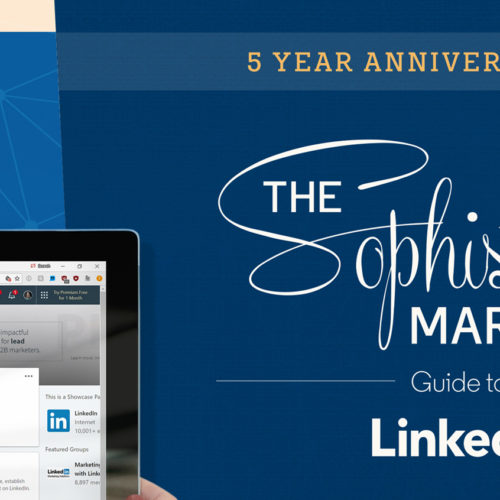
This is a blog by our staff copywriter and Content Specialist, Cassie.  What makes a sophisticated marketer? A sophisticated marketer is someone who knows more than the definition of marketing—they know the ins and outs and that the industry is ever-changing. These smarties know that because the industry is always changing, they also need to learn and adapt to make the industry work for them. The main goal of a sophisticated marketer—to continuously learn and grow. In order to do these two things, marketers across the world look towards industry influencers for guidance and thanks to lists such as LinkedIn’s Sophisticated Marketer’s Guide to LinkedIn, users can identify those leaders and learn all that they have to offer. [bctt tweet=”.@JuliaEMcCoy was featured in @LinkedIn’s recent shortlist of 24 B2B #marketing experts to follow! See the other rockstar marketers and learn more about the guide ” username=”ExpWriters”] How LinkedIn Has Changed the Game LinkedIn is a game changer for almost anyone in any industry. Seriously. Not only is it a social media platform designed for professionals—allowing them to network, find and post jobs—but it is a platform designed to share information with the masses. The social media platform began compiling its yearly Sophisticated Marketer’s Guide to LinkedIn in 2014. Each year, the publication’s goal was to become the “definitive guide to growing businesses and building brands,” on LinkedIn. LinkedIn acknowledges that marketing is an ever-changing industry, and because of that, they have gone out of their way to include more features to the platform. A few of these features include: Robust new marketing solutions, Targeting marketing activity The ability to track the overall reach, engagement, and ROI that user content generates. How LinkedIn Adds Value With The Sophisticated Marketer’s Guide to LinkedIn I think we can all learn from how LinkedIn does ‘lead magnets!‘ LinkedIn’s 55-page Sophisticated Marketer’s Guide to LinkedIn truly shines. First, LinkedIn listened in to their users’ top questions, and that’s what the guide was built on. Listen and learn, content marketers! According to Alex on the LinkedIn Blog: “For the last five years, The Sophisticated Marketer’s Guide to LinkedIn has been the definitive guide to growing businesses and building brands on our platform. We launched it in January 2014 to answer the questions that we kept hearing marketers ask. It remains our most regularly downloaded piece of ‘big rock’ content, which shows that questions about how to use LinkedIn for marketing are as relevant now as they ever have been.” Inside the actual ebook is a ton of value. It holds a gold mine of information, including information on: Publishing on LinkedIn Balancing organic and paid activity and maximizing them both for effectiveness Tips and tactics on popular topics such as sponsored content sponsored InMail, Text Ads, Pages, Elevate and so much more. This massive, in-depth, well-designed guide is a valuable product for any marketer, and the tips and tactics that are included within it come from top experts in the marketing industry. And in this year’s 5th-anniversary edition, LinkedIn included a list of 24 B2B marketing experts that they say are worth following. Congratulations, Julia! Speaking of marketing experts, Express Writer’s own CEO, Julia McCoy, was included in this year’s top 24 list of B2B Marketers You Need to Know! Julia is more than an expert marketer—she’s also a bestselling author and expert writer. So, what does Julia believe in when it comes to her work? “A helluva lot of hard work, learning from failure, always being open to self-improvement and also having a constant mindset of ‘You can do anything you put your mind to.’” -Julia McCoy [bctt tweet=”Our leader believes in a helluva lot of hard work, learning from failure, always being open to self-improvement and also having a constant mindset of ‘you can do anything you put your mind to.’ @JuliaEMcCoy” username=”ExpWriters”] A big shout out to you, Julia, for not only being named by LinkedIn’s staff and making this year’s list of top B2B Marketers to Know but for all you have accomplished to date! Meet the Other 23 Experts Who Made the List While we here at Express Writers are beyond proud of Julia’s accomplishments, 23 other marketing experts made the list and are worth following up on! Robert Rose Chief Troublemaker, The Content Advisory Twitter: @Robert_Rose LinkedIn: /in/robrose Robert is also known for being a bestselling author, keynote speaker, and his skills in content strategy and as a customer experience expert. (Our CEO Julia was honored to author a piece for his site, The Content Advisory, not too long ago.) Aaron Orendorff Founder, iconiContent Twitter: AaronOrendorff LinkedIn: in/aaronorendorff Aaron has also appeared on the Forbes Top 10 B2B Content Marketers list, and is an all-around ninja-level content marketer. Ryan Robinson Content Marketing Consultant Twitter: TheRyanRobinson LinkedIn: in/theryanrobinson/ Ryan is a content marketing consultant to the world’s top experts and growing startups. A few companies he writes for include Forbes, Entrepreneur, Business Insider, and Fast Company. Carla Johnson Chief Innovator, Type A Communications Twitter: CarlaJohnson LinkedIn: /in/carlajohnson Carla is a global keynote speak and bestselling author in the greater Denver area. She has also been named one of the top 50 women in marketing and one of the top 10 influencers in B2B marketing. Allen Gannett CSO, Skyword Twitter: Allen LinkedIn: /in/allengannett Allen is not only the CSO at Skyword; he is also the author of the book “The Creative Curve.” Shane Barker Co-Founder and CEO, Content Solutions Twitter: shane_barker LinkedIn: /in/shanebarker Shane specializes in influencer marketing, product launches, content marketing, sales funnels and website conversions. He’s also shared his knowledge with over 100 publications, including Huffington Post, Forbes, Entrepreneur, and Inc. Ann Handley Chief Content Officer, MarketingProfs Twitter: MarketingProfs LinkedIn: /in/annhandley Ann is not only a digital marketing and content expert; she is also a Wall Street Journal bestselling author and a keynote speaker. Katie Martell Marketing Consultant, On-Demand Marketing Twitter: KatieMartell LinkedIn: /in/katiemartell Katie has several recognitions under her belt, including one of the top 10 marketing writers on LinkedIn, the number three most influential B2B marketer on Twitter, and a top 100 influencer in content marketing. Mandy McEwen … Read more